Buying scrap car parts online in 2026 can reduce repair costs, but the cheapest listing is rarely the safest choice. A suitable part must match your vehicle’s VIN, production year, engine code, transmission, and trim level. One wrong connector can leave a car immobile. Worse, a damaged safety component may create risks that photographs cannot reveal.
Automotive recycling specialist Mark Galloway says, “A cheap part is only a bargain when it fits and works.” That practical warning shapes this guide. We will examine how to compare scrap car parts, verify seller information, inspect photographs, and ask precise questions before payment. Look for clear images of mounting points, wiring plugs, casting numbers, and visible wear. A listing that shows only one blurry angle deserves caution. So does a seller who avoids explaining the part’s origin or testing process.
Online buying still involves uncertainty. Even careful buyers can misread a compatibility chart or overlook corrosion behind a panel. I have found that writing down the VIN and photographing the original part prevents avoidable mistakes. Check the seller’s return policy, warranty terms, delivery estimate, and customer feedback. Confirm whether the part was tested, cleaned, or sold as untested. Avoid parts with unclear descriptions, altered serial markings, or suspiciously low prices. For brakes, airbags, steering, and other safety-related components, professional inspection remains essential. This guide offers practical direction, not a substitute for qualified mechanical advice.
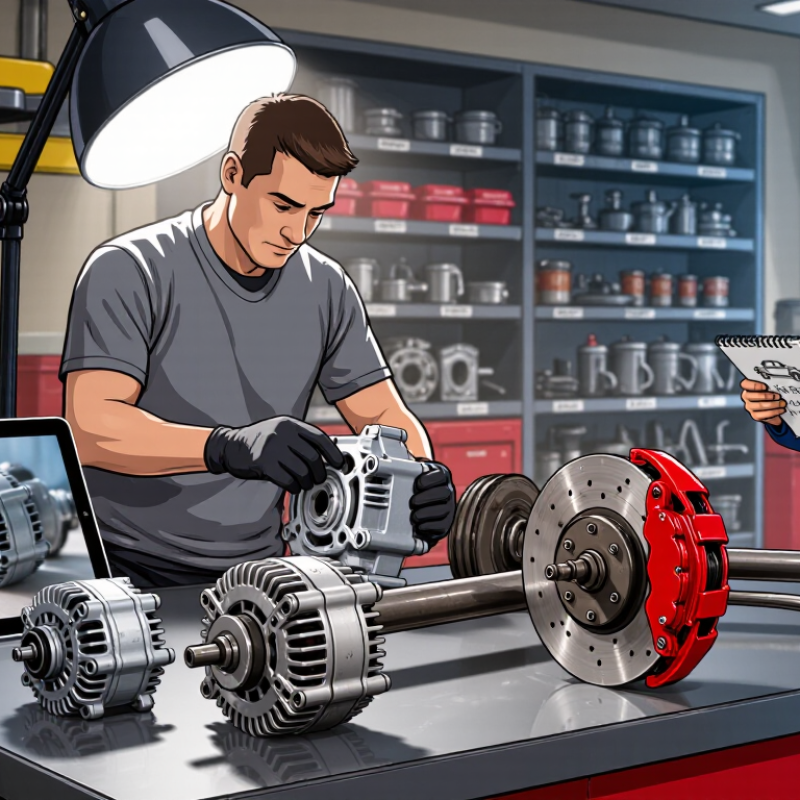
Buying scrap car parts online can save money, but accurate identification prevents expensive mistakes. I always begin with the vehicle identification number, or VIN. It confirms the model year, engine type, transmission, and factory configuration. A registration document or dashboard plate usually provides this number.
The OEM number adds another layer of confidence. Search for it on the removed part, service invoice, or reliable parts catalog. Numbers can differ by engine size, production date, or drivetrain. Do not trust a similar-looking photograph alone. I once ordered a mirror that matched the body color but had the wrong electrical connector. It fitted poorly.
Check the vehicle trim carefully. Base, sport, luxury, and utility trims may use different seats, lights, sensors, or control modules. Compare connector shapes, mounting holes, dimensions, and visible markings. Ask the seller for clear photos and the donor vehicle’s mileage. Request a written condition description, including cracks, corrosion, missing clips, or tested functions.
Small details matter. Keep screenshots of the listing and messages. Review the seller’s return terms before payment. Some parts cannot be returned after installation or testing. I still recheck every number before ordering, because online listings sometimes contain copied or incomplete information.
Setting a firm budget is the smartest starting point. Recycled car parts can cost 20–80% less than new replacements, according to the Automotive Recyclers Association. Prices vary with demand, mileage, condition, and shipping distance. A used side mirror may save hundreds, while a damaged connector can create unexpected costs. Leave room for delivery, installation, and possible returns.
Check the part number, vehicle year, engine size, and transmission type before ordering. Clear photos should show mounting points, labels, rust, cracks, and electrical plugs. Ask about testing records and the part’s warranty in writing. Experienced dismantlers usually provide useful details, but online listings are not always complete. I once trusted a matching description too quickly. The connector was different. That small mistake delayed the repair.
Tips: Compare at least three listings. Use your vehicle identification number when available. Measure unusual parts before payment. Confirm whether the price includes shipping and taxes. Read return conditions carefully, especially for electronic modules. Choose sellers with verifiable contact details, detailed grading standards, and secure payment options. If the savings seem too large, pause and investigate. Cheap is not always economical.
How to Buy Scrap Car Parts Online in 2026?
EPA’s 12-million-vehicle recycling benchmark shows the scale of end-of-life vehicle recovery in the United States. Use it as a quality signal, not automatic proof. Certified sellers should document lawful dismantling, fluid removal, and material recovery. Recent industry reports also place automotive recycling near the 85% recovery range by vehicle weight. Numbers matter. Paperwork matters more.
Before ordering, request the donor vehicle’s VIN, mileage, dismantling date, and exact part number. Compare those details with the seller’s photos. A used transmission should show its casing, connectors, fluid ports, and mounting points. Ask for a test report when available. Check the warranty length, return conditions, and shipping damage process in writing. A professional seller will answer clearly, not pressure you.
I have learned that “excellent condition” means little without evidence. It may describe appearance, not performance. That is the weak point. Certification can reduce risk, but it cannot remove every risk. Confirm compatibility with a qualified technician before payment. Keep screenshots of the listing and inspection notes. EPA data gives the market context; careful verification protects your vehicle, budget, and safety.
| Data Dimension | Verified Fact or Benchmark | Recommended 2026 Buyer Check | Evidence to Request |
|---|---|---|---|
| Annual vehicle recycling volume | Approximately 12 million vehicles are recycled in the United States each year, according to the U.S. Environmental Protection Agency’s automotive recycling information. | Prefer sellers that document vehicle sourcing, dismantling, inventory control, and environmentally responsible recycling practices. | Recycler license, operating address, dismantling procedures, and environmental compliance statement. |
| Vehicle identification | Vehicles manufactured for sale in the United States since the 1981 model year generally use a 17-character Vehicle Identification Number. | Match the complete VIN, model year, body style, engine, transmission, and drivetrain before ordering. | VIN photograph, donor-vehicle description, compatibility notes, and part identification number where available. |
| Part condition grading | Used-part condition descriptions are not completely standardized across all online marketplaces; terms such as “tested,” “reconditioned,” and “as-is” can have different meanings. | Buy only when the listing defines the grade, visible damage, mileage, testing method, and included components. | Written condition report, test results, close-up photographs, mileage statement, and a complete-parts list. |
| Seller certification and licensing | There is no single nationwide certification that automatically applies to every online used-part seller. Licensing and regulatory requirements can differ by state. | Verify the seller’s legal business identity, applicable state license, physical location, and documented quality-control process. | License number, business registration details, inspection policy, customer-service contact, and written terms. |
| Emissions-related components | Federal law prohibits tampering with or removing vehicle emissions-control systems. State inspection and replacement requirements may be stricter. | Confirm that the replacement part is legal for the vehicle’s model year, location, and intended use; avoid modified or emissions-defeating parts. | Compatibility statement, emissions-compliance documentation where applicable, and installation restrictions. |
| Warranty coverage | Used-part warranties are generally governed by the seller’s written terms and applicable consumer-protection law; coverage is not automatically identical between sellers. | Compare warranty duration, covered failures, labor coverage, exclusions, claim deadlines, and return-shipping responsibility. | Full warranty document, invoice terms, return authorization process, and claim contact information. |
| Return and refund policy | Return rights and restocking rules may depend on the seller’s policy, the purchase method, and applicable state or federal consumer law. | Confirm the inspection period before installation and document unopened packaging, shipping damage, and serial numbers. | Return window, restocking fee, refund timing, packaging requirements, and damage-reporting procedure. |
| Shipping and total purchase cost | The advertised part price may not include shipping, handling, core charges, taxes, or special freight requirements for large components. | Compare the final delivered cost rather than the displayed part price alone. | Itemized quotation showing part price, shipping, taxes, core charge, delivery estimate, and any surcharge. |
| Environmental handling | Vehicle recycling involves recovery and reuse of materials while requiring proper handling of fluids, batteries, refrigerants, airbags, and other regulated or hazardous components. | Choose sellers that describe fluid draining, battery management, refrigerant recovery, and regulated-waste controls. | Environmental policy, waste-handling records, recycling documentation, and relevant permits or certifications. |
| Payment and fraud protection | A verifiable business identity, secure payment process, clear invoice, and traceable communication reduce the risk of purchasing counterfeit, misrepresented, or non-existent parts. | Avoid irreversible payment methods and do not pay outside the seller’s documented checkout or invoicing process. | Secure checkout indicator, formal invoice, business contact details, order confirmation, and written dispute procedure. |
Note: Certification, licensing, warranty, emissions, and return requirements can vary by jurisdiction and part type. Verify current federal and state requirements before purchase or installation.
Used car parts deserve careful comparison, not quick clicking. S&P Global Mobility reported that the average U.S. vehicle age reached 12.6 years in 2024. Older vehicles increase demand for affordable replacement components. Before ordering, confirm the exact part number, vehicle year, engine type, mileage, and compatibility notes. A clear photo should show connectors, mounting points, rust, and visible damage. “Tested” is useful, but it does not explain every failure risk.
Condition labels can be inconsistent. Ask whether the part was inspected, cleaned, or tested under load. Compare warranty length, covered defects, labor exclusions, and claim deadlines. A 30-day warranty may sound reasonable, but installation costs can exceed the part’s price. The 2023 NRF and Appriss Retail report estimated online returns at 17.6% of sales. Check who pays return shipping, whether restocking fees apply, and whether the original packaging must remain intact.
Tips: Save screenshots of the listing, warranty, and return policy. Measure the shipping box before buying. Oversized parts can create unexpected delivery charges. Review tracking, insurance, and damage-reporting deadlines. I have learned that “free shipping” can hide strict return conditions. A perfect listing is not always a perfect part. When details remain vague, pause and ask for written confirmation before payment.
Buying a used car part online is not only a price comparison. Safety verification should come before payment. Start with the vehicle identification number, model year, engine type, and exact part number. Small differences can affect braking, steering, airbags, or electrical connections. A clear photograph helps, but it does not prove compatibility.
Check the vehicle’s recall history through the National Highway Traffic Safety Administration database. Look for open recalls linked to the specific vehicle, especially recalls involving fuel systems, restraints, brakes, or steering. A replacement part may look identical while lacking a required safety update. Ask the seller for the donor vehicle’s history, mileage, damage location, and removal date. Missing details are warning signs.
Read the installation requirements before ordering. Some parts need programming, calibration, special tools, or a trained technician. Others require new fasteners, seals, sensors, or alignment checks. Confirm whether the part includes these items. Do not assume a complete-looking package is ready to install. It may not be. Save the listing, messages, photographs, and return conditions. These records support careful decisions if the part arrives damaged or unsuitable. When information conflicts, pause the purchase and verify it with a qualified repair professional. A cheaper component is not a bargain if installation creates another safety problem.
Before purchasing a used or scrap part, confirm these five independent details: the vehicle’s recall status, exact fitment, installation instructions, required torque specifications, and the seller’s return conditions. The chart shows the number of verification items in each safety category; it is a checklist, not a probability or failure-rate comparison.
Safety reference: National Highway Traffic Safety Administration recall information.
Logel’s Auto Parts
116 Bridge St East
Kitchener, Ontario
N2K 1J6
Phone: 519-745-4751
Toll Free: 1-800-818-9118
Hours 8:00-5:00 Monday to Friday
At Logel’s Auto Parts, we serve a range of communities in Southern Ontario, including:
Sign up today for the latest updates from the Logel’s Auto Parts team, including pricing for scrap vehicles, our newest product lines, current operating hours, and much more.