
A Fixed Speed Screw Compressor can be a practical choice for businesses with steady, predictable demand for compressed air. It runs at a consistent motor speed, supplying air without the variable-speed controls found in some other models. For a workshop running pneumatic tools through most of the day, that straightforward operation may be easier to plan around. Simple matters.
The right compressor can support reliable production, but the decision should start with actual air use. Record operating pressure, required flow, daily run hours, and periods of peak demand. Compare those figures with the compressor’s rated capacity, and check the manufacturer’s guidance for installation and maintenance. A unit that is too small may struggle during busy periods; one that is oversized may run inefficiently or cycle more often than expected. Details matter.
Fixed-speed equipment may suit facilities where air demand stays fairly even, such as some manufacturing lines or continuous workshop tasks. It can also offer a simpler control system. Yet “simpler” does not automatically mean cheaper over its working life. Energy consumption, leaks, ventilation, service access, and downtime all affect operating costs. A compressor running hard in a poorly ventilated room is not a sound bargain.
This guide examines where fixed-speed screw compressors fit, what to assess before purchase, and how routine care affects performance. Actual results depend on the application, equipment selection, and operating conditions. There is no universal best choice. Businesses with sharply changing demand should compare fixed-speed models with variable-speed alternatives using measured load data, not assumptions. A careful comparison may take extra time, but it can prevent a costly mismatch.
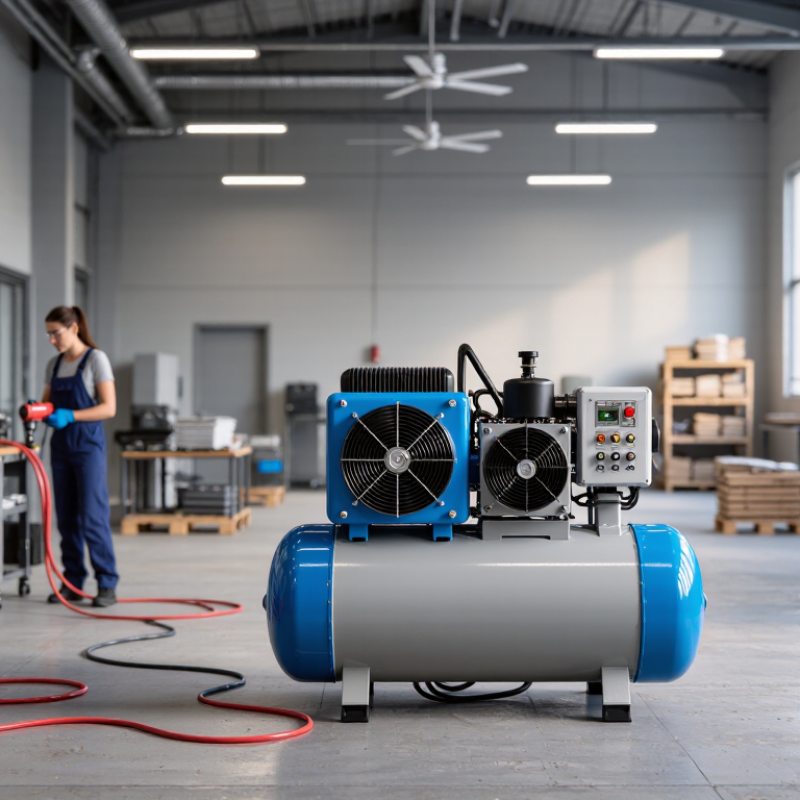
A fixed-speed screw compressor uses two intermeshing helical rotors to trap and compress air. As the rotors turn, air moves from the inlet toward the discharge port, where pressure rises. The motor runs at a steady speed whenever the compressor is loaded. A control system typically switches between loaded and unloaded operation as air demand changes. Simple in principle. Not always simple in practice: during unloaded periods, the machine may still consume power without producing useful compressed air.
This design often suits facilities with steady air demand, such as production lines using pneumatic tools throughout a shift. Operators can hear the change in tone when the compressor unloads, and a receiver tank helps buffer short demand peaks.
The U.S. Department of Energy’s Improving Compressed Air System Performance handbook notes that compressed air systems can account for about 10% of industrial electricity use. That figure covers the whole system, not compressors alone, but it shows why operating patterns matter.
The U.S. Department of Energy also recommends assessing supply and demand together; choosing a compressor by rated capacity alone can miss losses from leaks, pressure settings, and idle running. Fixed speed is predictable, yet fluctuating demand may make its unloaded hours costly. That trade-off deserves a site-specific review.

A fixed-speed screw compressor turns a pair of interlocking helical rotors at a steady motor speed. Air enters through an inlet valve and fills spaces between the rotors. As they rotate, those spaces shrink, raising the air pressure. The compressed air then moves toward the outlet and into the plant’s air system. The process is continuous. There are no piston strokes or long pauses between compression cycles.
Many units use oil for sealing, lubrication, and cooling, while oil-free designs manage these needs differently. After compression, air may pass through a separator, cooler, and moisture-control equipment, depending on the system. A pressure switch or controller starts and stops the motor, or shifts the compressor between loaded and unloaded operation. During unloading, the motor may keep running while producing little or no useful air. That detail is easy to overlook, and it can affect energy use when demand varies widely.
In practice, the compressor’s steady rotation suits operations with fairly consistent air demand. A receiver tank helps smooth short demand peaks, such as tools starting together. Operators should check pressure, temperature, and unusual vibration during routine inspections. Small changes can signal a developing issue. The exact controls and service needs vary by design, so operating instructions matter more than assumptions. Fixed speed is simple in principle, but not automatically efficient in every workday.
Fixed-speed screw compressors suit businesses that use compressed air at a fairly steady rate throughout the working day. Think of a packaging line running the same shift, a machine shop operating several air tools, or a production facility with continuous pneumatic controls. In these settings, predictable demand lets the compressor run and unload in a repeatable pattern. That can make operating schedules easier to manage. The sound is steady, too.
They can also be a practical fit for workshops with regular blasting, conveying, or assembly tasks, provided the air demand is properly measured. A site assessment should include peak flow, pressure requirements, shift patterns, and future equipment plans. A receiver tank can help handle short demand spikes, but it cannot make an undersized compressor adequate. Worth checking carefully. If air use rises and falls sharply—such as in a facility with intermittent production—a fixed-speed unit may spend more time unloading than expected. That can reduce efficiency. Real demand records are more useful than a quick estimate, and even good records may miss seasonal changes. The right choice depends on the actual load profile, not just the compressor’s rated capacity.
Typical application fit depends on how consistently a business uses compressed air.
How to read this chart: Higher scores indicate applications that typically have steady, sustained air demand—conditions well suited to a fixed-speed compressor, which runs at a constant motor speed when operating. Scores are qualitative guidance, not measured industry data; confirm actual demand with an air audit.
A fixed-speed screw compressor runs its motor at a constant speed while air demand remains within its working range. This straightforward design suits workshops, packaging lines, and production floors with steady consumption. Operators gain predictable airflow, stable pressure, and uncomplicated controls. That predictability matters when pneumatic tools must start together at 7 a.m. or a filling line cannot tolerate pressure dips.
Start-up is predictable.
The simpler architecture can reduce purchase costs and make routine servicing easier. Technicians can inspect oil, filters, separators, belts or couplings, and safety controls using familiar procedures. Fewer electronic components may also mean fewer specialized faults in dusty or warm plant rooms. In my experience, practical reliability often matters more than impressive specifications. A compressor that starts consistently after a quiet weekend earns trust. Fixed-speed units can also deliver strong full-load efficiency, especially when demand stays near their rated capacity. Their output remains steady, helping receivers and control systems maintain an even supply.
There is a limitation. When demand changes sharply, the motor may keep running while little air is needed, increasing unloaded energy use. That weakness deserves an honest calculation. Review shift patterns, leakage, receiver size, and daily load before choosing. A fixed-speed model may suit continuous production, but not a facility with long idle periods.
Demand still matters. I would measure actual consumption for a week, rather than rely on estimates. That small step can prevent an expensive mismatch.
Choosing a fixed speed screw compressor starts with the air profile, not the catalog rating. Measure average demand, peak demand, operating hours, and pressure requirements. A workshop using air tools all day may benefit from steady output. A lightly loaded facility may waste energy through frequent unloading. Watch the load pattern. One week of readings is better than a guess. Record leaks, shift changes, and seasonal production changes. Do not size the machine only for the largest tool. That often creates an oversized system.
Businesses should compare purchase price with lifetime operating cost. Fixed speed units can be practical when demand stays relatively stable. They are often straightforward to operate and maintain. Ask about service intervals, lubricant requirements, filtration, cooling, and access to replacement parts. Confirm rated flow at the pressure your equipment actually needs. Numbers measured under different conditions can mislead. Check installation details too. A hot, dusty room shortens maintenance intervals. Poor ventilation raises discharge temperature and may trigger shutdowns. An experienced technician can inspect the room before purchase.
Noise, floor space, electrical capacity, and receiver size also affect the decision. A receiver can reduce short cycling, but it cannot repair poor demand planning. Consider controls, drain management, and monitoring features. Useful data includes running hours, pressure trends, and alarm history. Ask for documented test conditions and maintenance guidance. Independent energy calculations add confidence. Still, calculations are not reality. Production may change after installation. Leave room for expansion, but avoid paying for unused capacity today. A site trial or temporary measurement can reveal weaknesses before commitment.
| Decision Factor | Fixed Speed Screw Compressor Characteristics | When It May Be a Suitable Choice | Potential Limitation | What to Check Before Purchase |
|---|---|---|---|---|
| Compressed-Air Demand Profile | Runs at a constant motor speed and normally uses load/unload control to respond to demand. | Best fit Facilities with a stable and consistently high air demand. | May consume more power than a variable-speed unit when demand frequently falls below full load. | Review logged air demand over several production shifts, including start-up, peak, and idle periods. |
| Initial Purchase Cost | Usually has a simpler drive system and can have a lower initial purchase price than an equivalent variable-speed model. | Businesses prioritizing lower capital expenditure or replacing an existing fixed-speed unit. | A lower purchase price does not necessarily mean the lowest total cost of ownership. | Compare purchase, installation, commissioning, controls, and required air-treatment costs. |
| Energy Efficiency | Can operate efficiently near its rated operating point, but efficiency may decrease during unloaded or lightly loaded periods. | Sites where the compressor operates close to its design capacity for most of the working day. | Frequent unloading, short production runs, or fluctuating demand can increase specific energy consumption. | Request power consumption data at expected load levels, not only the full-load rating. |
| Demand Variation | Capacity is generally controlled by loading and unloading rather than continuously changing motor speed. | Processes with predictable demand and limited variation between operating cycles. | It may be less responsive and less energy-efficient when demand changes rapidly or frequently. | Identify the minimum, average, and maximum flow requirements and the frequency of demand changes. |
| Operational Simplicity | Uses a relatively straightforward control arrangement with fewer variable-speed drive functions. | Operations teams that value simple operation and familiar maintenance procedures. | Control flexibility may be lower than that of a variable-speed system. | Confirm controller functions, alarm reporting, remote monitoring, and operator training requirements. |
| Maintenance Requirements | Requires routine servicing of components such as oil, filters, separators, belts or couplings, and the air end. | Facilities with a planned preventive-maintenance program and qualified service personnel. | Neglected maintenance can reduce efficiency, increase oil carryover, and shorten component life. | Check service intervals, spare-parts availability, maintenance access, and warranty conditions. |
| Reliability and Duty Cycle | Designed for continuous industrial operation when correctly sized, installed, and maintained. | Applications requiring a dependable base-load air supply during extended production periods. | Oversizing or excessive cycling can increase mechanical stress and operating costs. | Match the compressor to the required duty cycle and follow the manufacturer's minimum operating guidance. |
| System Control and Sequencing | Can be used as a base-load machine in a multi-compressor system with a suitable central controller. | Plants using multiple compressors where one unit can cover a predictable base load. | Without proper sequencing, several compressors may run inefficiently or unload at the same time. | Evaluate lead-lag control, pressure-band settings, receiver capacity, and communication compatibility. |
| Air Receiver Capacity | A properly sized receiver can help stabilize pressure and reduce unnecessary load/unload cycling. | Systems with intermittent air use or short-duration demand peaks. | An incorrectly sized receiver may cause pressure fluctuation or excessive cycling. | Size the receiver according to flow, pressure range, compressor control method, and demand pattern. |
| Noise and Installation Environment | Produces mechanical and airflow noise that must be considered in the compressor-room layout. | Dedicated compressor rooms with adequate ventilation and controlled access. | Poor ventilation can raise operating temperature and affect performance and service life. | Check sound levels, ventilation requirements, ambient temperature limits, floor loading, and clearance. |
| Pressure and Flow Requirements | Available flow depends on motor size, operating pressure, inlet conditions, and the compressor's performance curve. | Applications with clearly defined pressure and flow requirements. | Operating at a pressure higher than necessary increases energy use and may reduce delivered flow. | Confirm required pressure at the point of use, pressure losses, free air delivery, and future capacity needs. |
| Total Cost of Ownership | May provide attractive lifetime economics when utilization is high and demand is stable. | Businesses evaluating equipment over a multi-year operating period rather than only the purchase price. | Electricity, maintenance, downtime, air leaks, and pressure settings can outweigh the initial price difference. | Calculate energy, maintenance, installation, downtime, and disposal costs over the planned service life. |
Logel’s Auto Parts
116 Bridge St East
Kitchener, Ontario
N2K 1J6
Phone: 519-745-4751
Toll Free: 1-800-818-9118
Hours 8:00-5:00 Monday to Friday
At Logel’s Auto Parts, we serve a range of communities in Southern Ontario, including:
Sign up today for the latest updates from the Logel’s Auto Parts team, including pricing for scrap vehicles, our newest product lines, current operating hours, and much more.