
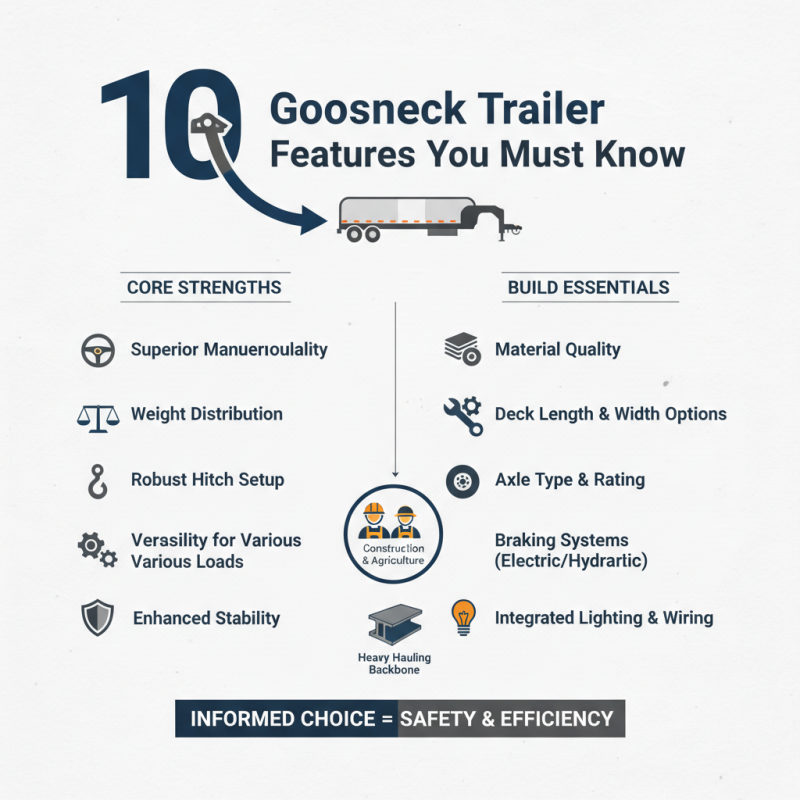
In the realm of transportation, Gooseneck Trailers stand out for their versatility and strength. Industry expert John Mitchell, a seasoned trailer designer, once stated, "Gooseneck trailers are the backbone of heavy hauling." This highlights their crucial role in various sectors, from construction to agriculture.
Understanding the key features of a gooseneck trailer is essential for making informed decisions. These trailers have distinctive advantages, like superior maneuverability and weight distribution. However, not all gooseneck trailers are created equal.
Buyers often overlook critical aspects like the hitch setup and material quality. These factors can significantly impact performance. Recognizing the top features helps in selecting the right trailer for your needs. A well-informed choice ensures safety and efficiency on the road.
Gooseneck trailers are popular for their unique design and functionality. One essential element is the adjustable coupler. This feature lets users easily connect and disconnect the trailer from various vehicles. A secure connection reduces the risk of accidents during transportation. However, not all designs achieve the same reliability. Some couplers may wear out quickly, leading to safety concerns.
Another key design element is the weight distribution system. A well-designed distribution system enhances stability, especially when hauling heavy loads. This feature can greatly improve the handling of the trailer. Yet, some trailers may lack adequate features, making it harder to balance the load. Users might find themselves overcompensating, which can cause issues on the road.
Storage options are also vital. Effective trailer designs incorporate ample storage compartments. These compartments help keep tools and equipment secure while optimizing space. But poor layouts can make access difficult, frustrating users when they need something quickly. In the end, considering these elements while selecting a gooseneck trailer can make a significant difference in functionality and convenience.

This chart illustrates the essential design elements of gooseneck trailers, highlighting key features that enhance their functionality and usability.
Gooseneck trailers are increasingly popular in various industries due to their versatility. Understanding their size and weight specifications is crucial for effective use. Most gooseneck trailers range in length from 20 to 40 feet. The standard width is usually 8.5 feet. Weight capacities can vary significantly, typically handling between 10,000 to 30,000 pounds. These specifications can greatly influence hauling efficiency.
Tip: Always check the load capacity of your gooseneck trailer before loading. Overloading can lead to safety hazards.
The height of gooseneck trailers generally stands around 6 to 7 feet. Some models offer adjustable heights for specific needs. Payloads are often distributed evenly to maintain balance. Misestimating weight can cause trailer swaying, which is dangerous on the road.
Tip: Regularly inspect your trailer's condition. Look for signs of wear and tear that can affect weight distribution.
Ultimately, knowing your trailer's specifications helps you make informed decisions. It can influence your choice of equipment and impact safety on the road. This knowledge is essential in maximizing the benefits of your gooseneck trailer.
Gooseneck trailers have become increasingly popular for hauling heavy loads. One key advantage is their superior weight distribution. Research shows that these trailers can handle up to 30% more load than conventional trailers. This makes them ideal for transporting equipment, livestock, or construction materials.
Another notable feature is the enhanced maneuverability. The gooseneck design allows for tighter turns. This can be crucial when navigating crowded job sites or rural roads. However, some users might find the attachment process cumbersome. It requires a compatible hitch and may not be suited for every vehicle.
Safety is also a significant consideration. Studies indicate that gooseneck trailers are less prone to sway, providing a stable towing experience. They often include built-in safety features, such as side rails. Yet, improper loading can lead to dangerous situations. Users must be vigilant about how they distribute weight on the trailer. Balancing the load is essential to prevent accidents on the road.
When selecting a gooseneck trailer, safety features play a crucial role. One key aspect is weight distribution. A well-balanced trailer reduces sway and enhances stability during transport. According to the National Highway Traffic Safety Administration, improper loading is a significant factor in trailer accidents. Ensuring optimal weight distribution is vital to prevent these incidents.
Brakes are another critical safety feature. Look for trailers equipped with electric brakes. They provide better control and responsiveness compared to traditional systems. Reports show that trailers with electric braking systems can reduce stopping distances by up to 30%. A well-placed braking system can significantly impact overall towing safety.
Lighting is often overlooked, yet it matters. Adequate lighting improves visibility when towing in low-light conditions. Research indicates that 30% of accidents happen at night, highlighting the need for bright, functioning lights. Regular checks of lights and signals can reduce potential hazards on the road. Remember, safety does not only mean having good equipment; it also involves regular maintenance and checks.
Maintaining a gooseneck trailer is essential for its longevity. Regular inspections are critical. Check the tires for proper inflation and wear. Low tire pressure can lead to blowouts. Also, look for cracks or damage in the sidewalls. Your safety depends on these small details.
Keep an eye on the brakes. They should respond promptly when activated. If you notice any unusual noise, investigate sooner than later. Lubricating moving parts is often overlooked. A bit of grease can prevent corrosion and ensure smooth operations.
Cleaning is often forgotten but necessary. Dirt and grime can cause wear over time. Focus particularly on the undercarriage. Road salts can be harmful, especially in winter. Rinse it thoroughly after use. It’s better to spend time now than face costly repairs later. Each maintenance step adds up, so don’t ignore them.
Logel’s Auto Parts
116 Bridge St East
Kitchener, Ontario
N2K 1J6
Phone: 519-745-4751
Toll Free: 1-800-818-9118
Hours 8:00-5:00 Monday to Friday
At Logel’s Auto Parts, we serve a range of communities in Southern Ontario, including:
Sign up today for the latest updates from the Logel’s Auto Parts team, including pricing for scrap vehicles, our newest product lines, current operating hours, and much more.