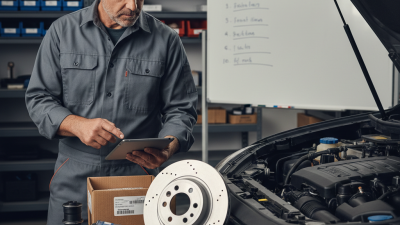
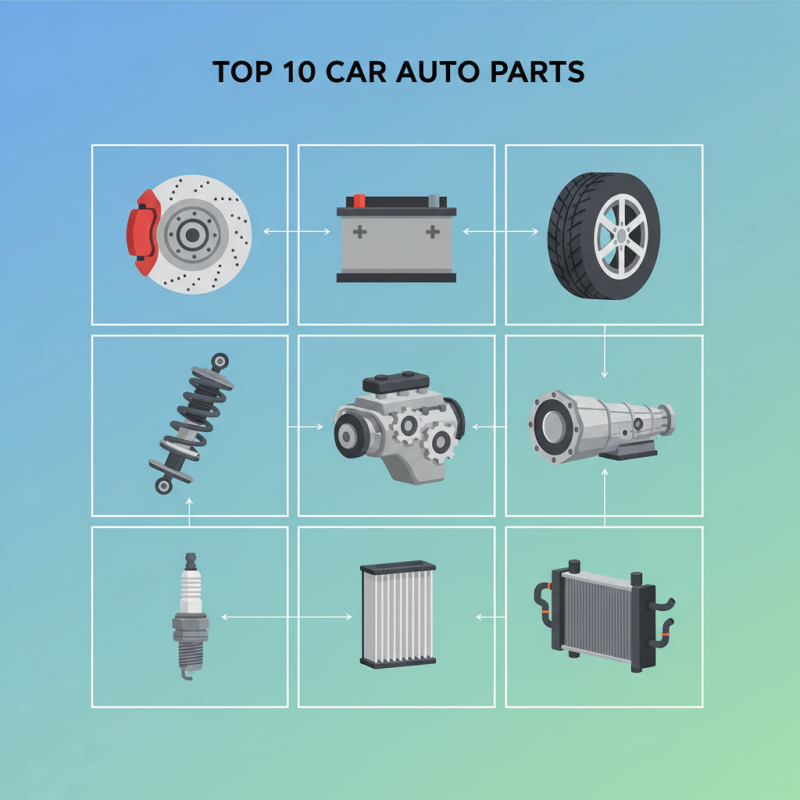
Understanding car auto parts is essential for every vehicle owner. Cars are complex machines, and each component plays a vital role in their performance. From brakes to batteries, having knowledge of these parts can help you make informed decisions.
There are key car auto parts that you should be familiar with. For instance, a brake system is crucial for safety. Without functioning brakes, your vehicle becomes a risk on the road. Similarly, the battery powers the entire electrical system. A dead battery can leave you stranded.
However, the world of car auto parts can be overwhelming. It's easy to overlook certain components until a problem arises. Neglecting regular maintenance can lead to costly repairs. Therefore, it is important to stay informed about these parts. Understanding their functions can prolong the life of your vehicle. Knowledge is power, especially when it comes to car maintenance.
When it comes to vehicle performance, the engine is the heart of your car. Understanding its components is crucial. Key elements include the cylinder block, pistons, and crankshaft. These parts work together to convert fuel into motion. Regular maintenance ensures they function optimally.
Tips: Always check your oil levels regularly. Low oil can harm your engine. Additionally, listen for unusual sounds. They might indicate a bigger issue.
Another important component is the camshaft. It controls the opening and closing of engine valves. If your car struggles to start, the camshaft might be the culprit. Pay attention to the fuel injectors too. They deliver the precise amount of fuel. Clogged injectors can affect performance.
Tips: Use high-quality fuel to keep the injectors clean. Also, replace air filters on time. A clean filter boosts engine efficiency. Your engine works best with fresh air and fuel. Remember, an overlooked component can lead to costly repairs. Stay informed and proactive about your engine’s needs.
Understanding key transmission parts is essential for any car owner. The transmission transfers power from the engine to the wheels. It enables smooth acceleration and deceleration. There are several critical components to know about.
The gearbox is the heart of the transmission. It contains gears that can adjust to different speeds. Without a properly functioning gearbox, the vehicle may struggle to change gears. The clutch is another vital part. It disconnects the engine from the wheels, allowing gear shifts. Sometimes, drivers overlook the importance of the clutch. A damaged clutch can lead to serious transmission issues.
Additionally, the torque converter plays a crucial role in automatic transmissions. It transfers engine power while allowing the vehicle to stop without stalling. Drivers might not realize that a failing torque converter can cause slippage. Fluid levels are equally important for all transmission types. Low fluid can lead to overheating and damage. Regular checks can prevent costly repairs.
This bar chart represents the importance level of various car auto parts, rated on a scale from 1 to 10. The engine is deemed the most critical part, followed closely by the transmission and brakes.
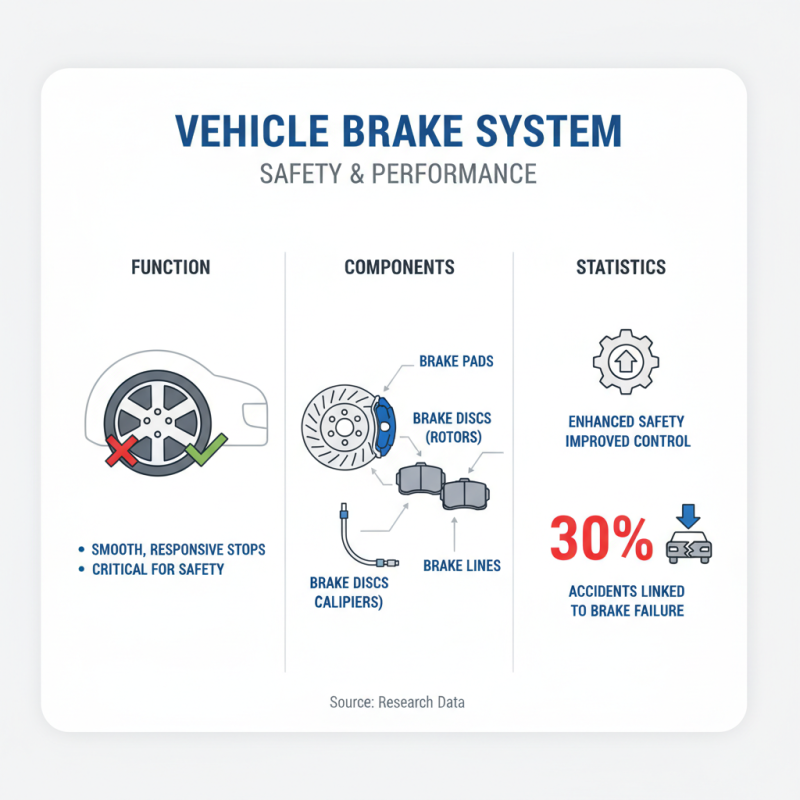
The brake system is critical for vehicle safety. Its components work together to ensure smooth and responsive stops. Understanding these components can enhance safety and efficiency. Key parts include brake pads, discs, calipers, and lines. Research indicates that up to 30% of accidents relate to brake failure.
Brake pads are crucial. They create friction, allowing the vehicle to stop. Worn pads can increase stopping distance significantly. Studies show that replacing worn brake pads can reduce stopping distances by 30% or more.
**Tips:** Check brake pads regularly. Listen for squeaking sounds. This could indicate it’s time for a replacement.
Calipers clamp the brake pads onto the discs. If calipers are malfunctioning, they can cause uneven wear. This leads to costly repairs. Regular inspections are essential to avoid surprises. Brake fluid levels should also be monitored. Low fluid can affect brake performance.
**Tips:** Inspect brake fluid monthly. Make sure it’s at the correct level. Change it every two years to maintain efficiency.
Understanding these components can lead to safer driving experiences. Ignoring brake system issues is a risk no driver should take. Regular maintenance is a smart investment for your vehicle’s safety.
The electrical system is vital in modern vehicles. It powers essential components like headlights, dashboard lights, and the infotainment system. Without a strong electrical system, these features falter. Therefore, understanding key parts is crucial.
The battery serves as the heart of the electrical system. It stores energy for the starter and powers electrical devices. A weak battery can leave you stranded. Regular testing can prevent this issue.
Next up is the alternator. It recharges the battery while the engine runs. If the alternator fails, the car will rely solely on the battery. This can lead to sudden electrical failures.
Tips: Always check the battery terminals for corrosion. Clean terminals help maintain a healthy electrical flow. Also, listen for unusual sounds from the alternator. Strange noises can indicate trouble ahead.
Finally, fuses protect various electrical circuits from overload. They are often overlooked but play a critical role. A blown fuse can disrupt power to the lights or radio. Carry spare fuses in your glove compartment. It's a simple fix that can save your day.
| Part Name | Function | Importance | Replacement Frequency |
|---|---|---|---|
| Battery | Provides electrical energy to start the engine | Essential for vehicle operation | Every 3-5 years |
| Alternator | Charges the battery and powers electrical systems | Critical for battery health | Every 5-7 years |
| Starter Motor | Turns the engine over to start it | Vital for starting the car | As needed - usually lasts 7-10 years |
| Fuses | Protects electrical circuits from overload | Prevents damage to electrical systems | Check regularly |
| Ignition Coil | Transforms battery voltage to spark the engine | Key for engine performance | Every 10 years |
| Electronic Control Unit (ECU) | Controls engine and transmission functions | Crucial for overall vehicle efficiency | Usually doesn't require replacement |
| Sensors (Oxygen, MAF, etc.) | Monitor and optimize engine performance | Critical for emissions and fuel efficiency | Every 50,000 miles |
| Headlights & Taillights | Provides visibility and signals to other drivers | Essential for safety | As needed - usually lasts 1-2 years |
| Wiring Harness | Connects various electrical components | Essential for functionality of systems | Lasts the life of the vehicle |
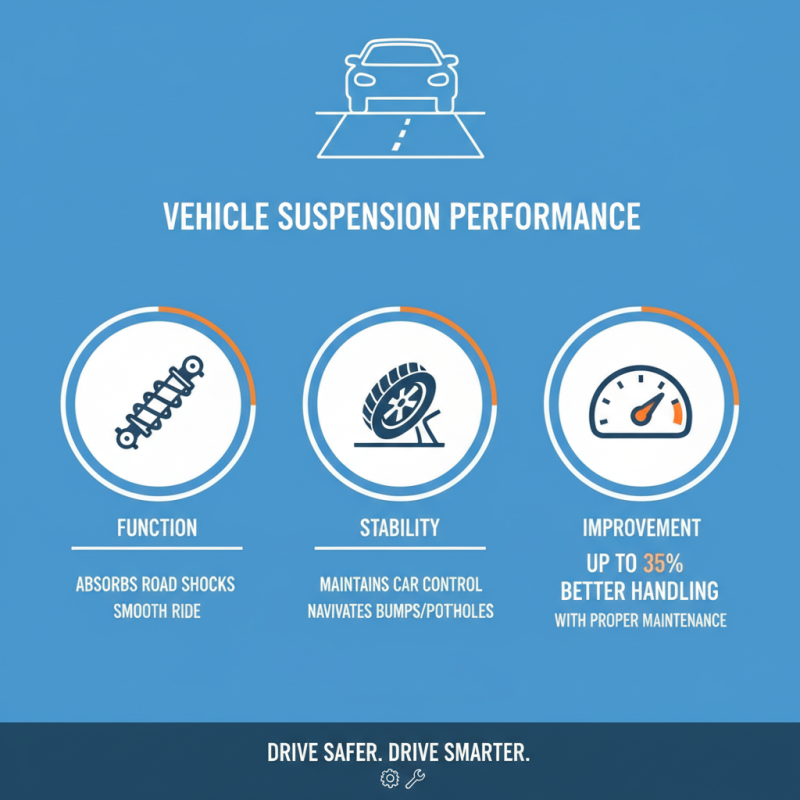
Suspension components play a crucial role in vehicle performance. They ensure a smooth ride by absorbing shocks from the road. When you encounter bumps or potholes, these parts work tirelessly to keep your car steady. Research indicates that a well-maintained suspension can improve vehicle handling by up to 35%. It's a significant improvement for drivers seeking comfort.
However, many car owners overlook suspension maintenance. About 65% of vehicles on the road are reported to have uneven tire wear due to weak suspension. This can lead to higher repair costs in the long run. Investing in quality suspension parts and regular inspections might seem costly, but it saves money over time. Prioritizing these components aids safety and performance, which is often underestimated.
Moreover, aging suspension parts can negatively affect fuel efficiency. A malfunctioning shock absorber can reduce mpg by 2 to 3%. Some drivers ignore warning signs like excessive bouncing or drifting. These issues indicate that suspension components may need a check-up. Addressing them promptly can make a significant difference, providing safety and enhancing the overall driving experience.
Logel’s Auto Parts
116 Bridge St East
Kitchener, Ontario
N2K 1J6
Phone: 519-745-4751
Toll Free: 1-800-818-9118
Hours 8:00-5:00 Monday to Friday
At Logel’s Auto Parts, we serve a range of communities in Southern Ontario, including:
Sign up today for the latest updates from the Logel’s Auto Parts team, including pricing for scrap vehicles, our newest product lines, current operating hours, and much more.