
China Top Aluminium Melting Furnace Manufacturers?

China has become an important source of industrial heating equipment, including aluminium melting furnace systems. Manufacturers serve foundries, die-casting plants, recycling facilities, and specialized metal processors. Their products may differ greatly in fuel type, capacity, control systems, and after-sales support.

A reliable comparison should examine more than catalogue photographs. Review furnace capacity, melting speed, temperature accuracy, energy consumption, refractory design, and emission-control features. Ask whether the supplier provides test records, component specifications, installation guidance, and maintenance training. Factory experience matters, especially when the furnace must operate beside casting lines, charging equipment, and cooling systems.

Technical credibility also comes from evidence. Look for documented projects, traceable materials, independent certifications, and clear warranty conditions. A serious manufacturer should explain burner performance, crucible life, safety interlocks, and expected aluminium recovery rates. These details reveal practical knowledge.

No shortlist is perfect. Public information can be incomplete, translated poorly, or presented selectively. A supplier with impressive equipment may still lack responsive service in your region. Direct video inspections, customer references, and written performance guarantees can reduce uncertainty. Buyers should compare total operating costs, not only the purchase price.

This guide examines leading Chinese aluminium melting furnace manufacturers through practical and verifiable criteria. It considers product quality, engineering capability, customization, delivery reliability, and technical support. The goal is not to promote the loudest company. It is to help buyers identify a dependable partner for safe, efficient, and stable aluminium melting operations.
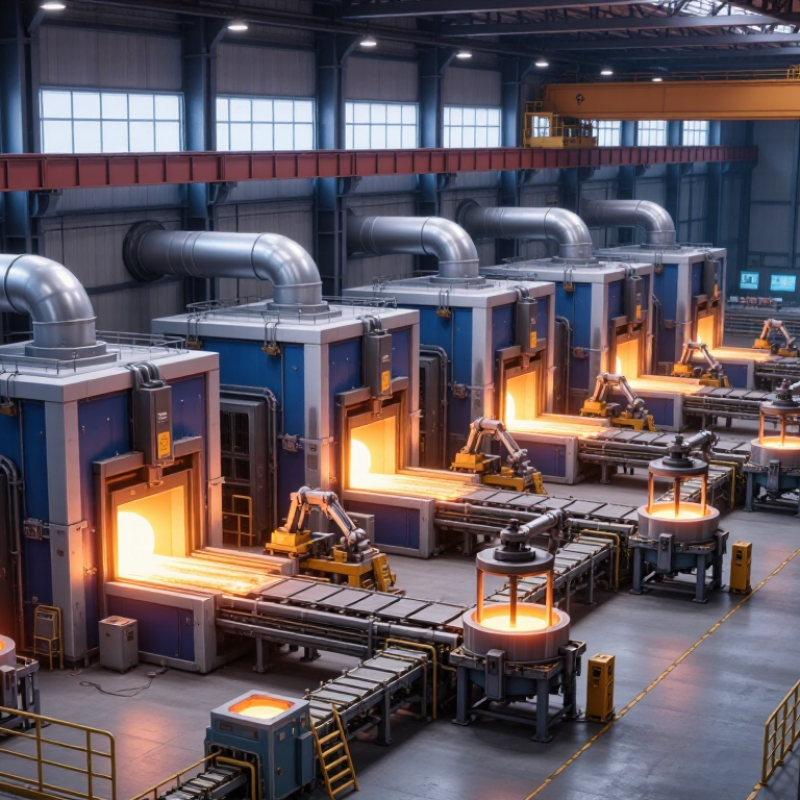
China Top Aluminium Melting Furnace Manufacturers?

What Is an Aluminium Melting Furnace?

An aluminium melting furnace is industrial equipment designed to convert solid aluminium into a controlled liquid melt. It uses gas, electricity, or induction heating to raise the metal above its melting range. The chamber contains a crucible or refractory-lined hearth that withstands repeated thermal cycling. Temperature sensors monitor the melt, while burners or heating elements supply consistent energy. This sounds simple. It is not.

In practical production, furnace performance depends on more than maximum temperature. A well-designed unit limits heat loss, reduces oxidation, and supports steady pouring. Operators must remove dross carefully because excessive stirring can trap oxides inside the metal. The furnace should also provide clear access, reliable controls, ventilation, and emergency shutoff systems. I have found that small design details matter, especially door sealing and thermocouple placement. A furnace can meet its specification yet perform poorly when maintenance is neglected.

When comparing aluminium melting furnace manufacturers in China, buyers should examine material quality, test records, energy consumption, and after-sales support. Ask for working temperature data under realistic loading conditions, not empty-furnace results. Check whether the lining, control cabinet, and safety interlocks match local requirements. No furnace is perfect. Fuel quality, operator habits, and alloy selection can change results. A dependable manufacturer explains these limits openly and provides operating guidance, inspection schedules, and replacement information. That transparency is often more valuable than a low initial quotation.


How Are Aluminium Melting Furnaces Designed and Classified?

Aluminium melting furnaces are designed around heat transfer, metal protection, and controlled handling. The chamber usually combines refractory lining, insulation, burners or electric elements, and temperature sensors. These parts must work together without creating excessive oxidation or aluminium loss.

In practical workshops, furnaces are classified by heat source, structure, and operating method. Fuel-fired models use gas or oil, while electric models rely on resistance or induction heating. Crucible furnaces melt aluminium inside a removable vessel. Reverberatory furnaces heat metal in a larger chamber, often supporting higher production volumes. Some units remain stationary, while tilting designs pour metal through controlled movement.

Capacity also matters. A small furnace may serve casting trials or repair work. Larger systems need stronger charging platforms, exhaust control, and automated temperature regulation. Engineers often select the lining according to operating temperature and alloy chemistry. Moisture control is essential, because damp tools can create dangerous splashing during charging.

A reliable design should limit heat loss and allow easy cleaning. It should also provide clear access to sensors, burners, and refractory surfaces. Yet classification is not always simple. A furnace may combine induction heating, tilting discharge, and automatic holding control. Labels alone can hide important differences.

From field experience, operators should examine melt rate, energy use, dross formation, maintenance access, and pouring accuracy. The cheapest furnace may become expensive when lining repairs interrupt production. Performance records are valuable, but real results can change with charge size, operator habits, and alloy selection.

Who Are China’s Leading Aluminium Melting Furnace Manufacturers?

China’s leading aluminium melting furnace manufacturers are established engineering firms with proven industrial installations, not merely large online catalogs. They typically design gas-fired, electric, or regenerative furnaces for die casting, extrusion, and secondary aluminium plants. The International Aluminium Institute reported China’s primary aluminium output at approximately 41.5 million tonnes in 2023. That scale creates demanding requirements for stable temperature control, fast charging, and reduced metal loss.

Look for manufacturers that publish furnace capacity, fuel consumption, melting rates, and emissions data. A serious supplier should provide trial-melt records, refractory specifications, burner details, and documented after-sales support. Practical testing matters. A 5-ton furnace should show consistent aluminium temperature near 660°C, limited dross, and repeatable cycle times. The IAI also notes that recycled aluminium uses roughly 5% of the energy required for primary production. Efficient remelting equipment therefore has strong commercial value.

China’s strongest candidates often combine furnace manufacturing with automation, combustion engineering, and refractory maintenance. They should explain how their systems handle contaminated scrap, alloy changes, and heat recovery. Published numbers are not always comparable. Some manufacturers report ideal laboratory performance rather than factory results. Buyers should request references from similar plants, inspect operating records, and calculate energy use per tonne. No supplier is perfect. A careful audit still reveals who can deliver reliably.

China Top Aluminium Melting Furnace Manufacturers? - Who Are China’s Leading Aluminium Melting Furnace Manufacturers?

Manufacturer Capability Category Common Furnace Type Typical Capacity Range Typical Fuel or Power Source Primary Application Important Selection Criteria
Small-batch furnace specialists Electric resistance crucible furnace 25–500 kg per batch Electricity Prototype work, laboratories, maintenance casting and small foundries Temperature stability, crucible life, compact footprint and simple controls
Medium-capacity foundry equipment suppliers Gas-fired or electric crucible furnace 300–2,000 kg per batch Natural gas, LPG or electricity General aluminum casting and non-ferrous metal foundries Heating efficiency, burner control, refractory quality and maintenance access
High-throughput melting system manufacturers Tilting or fixed reverberatory furnace 1–30 tonnes per batch Natural gas, LPG or oil, depending on configuration Continuous casting, die casting and large-scale production Melting rate, metal recovery, holding performance, emissions control and automation
Energy-efficiency focused manufacturers Regenerative burner furnace 1–15 tonnes per batch Natural gas or LPG High-volume remelting and recycled aluminum production Heat recovery, fuel consumption, combustion control and exhaust treatment
Clean-melting technology suppliers Medium-frequency induction furnace 100 kg–5 tonnes per batch Electricity Controlled alloy production, casting shops and recycled-metal melting Power factor, coil design, cooling system, electromagnetic stirring and safety interlocks
Holding and dosing furnace manufacturers Electric holding or dosing furnace 100–2,000 kg holding capacity Electricity High-pressure die casting and automated metal delivery Level control, dosing accuracy, thermal uniformity and integration with casting machines
Recycled-aluminum furnace specialists Rotary or side-well melting furnace 2–30 tonnes per batch Natural gas or LPG Scrap, chips, cans and contaminated aluminum recycling Scrap-feed flexibility, dross reduction, refractory protection and fume management
Turnkey furnace-system integrators Customized melting, holding and charging line Project-specific; commonly 1–30 tonnes per batch Electricity, natural gas or LPG Foundry modernization and complete production-line projects Layout engineering, PLC integration, installation, operator training and after-sales service

The capacity figures are representative industry ranges rather than rankings of individual manufacturers. Actual specifications depend on alloy, charge material, melting rate, operating temperature, local energy costs and required automation level.

How to Compare Chinese Aluminium Furnace Manufacturers

China Top Aluminium Melting Furnace Manufacturers?

How to Compare Chinese Aluminium Furnace Manufacturers

China’s aluminium furnace market serves casting plants, recyclers, and foundries worldwide. The International Aluminium Institute reported about 72.8 million tonnes of global primary aluminium production in 2024. China represented over half of that output. This scale creates strong manufacturing experience, but capacity alone proves little.

Compare manufacturers through measured performance, not attractive catalogues. Request a full trial report using your alloy, charge size, and scrap ratio. Check melting rate, fuel consumption, temperature uniformity, and metal loss. A reliable supplier should explain burner turndown, refractory thickness, thermocouple calibration, and emissions controls. Ask for references from plants with similar production schedules. The International Energy Agency continues to identify industrial energy efficiency as a major decarbonisation opportunity. Therefore, ask for energy data under defined operating conditions. “Low consumption” without test boundaries is weak evidence.

Tips: Inspect the furnace before payment. Review weld quality, access doors, spare-part lists, and control-system backups. Confirm whether performance data comes from factory testing or customer operation. A short video is not enough. Third-party inspection can expose small defects early. My practical concern is often overlooked: after-sales response may matter more than the initial quotation. Request response times, technician availability, and warranty exclusions in writing. Compare total ownership cost over five years, including refractory replacement, downtime, fuel, controls, and training. Some specifications still remain unclear, and that uncertainty deserves a lower evaluation score.

How to Compare Chinese Aluminium Melting Furnace Manufacturers

Typical specific energy consumption by furnace technology

Lower energy consumption generally indicates better thermal efficiency, but actual results depend on furnace capacity, metal temperature, charge composition, holding time, insulation, and operating conditions. When comparing manufacturers, request measured energy data, melting capacity, temperature uniformity, metal recovery, automation level, emission controls, and after-sales support under the same test conditions.

Benchmark values are typical industry ranges for aluminium melting applications and should be verified through supplier test reports and site trials.

What Standards and Services Should Buyers Evaluate?

China Top Aluminium Melting Furnace Manufacturers? What Standards and Services Should Buyers Evaluate?

A reliable furnace supplier should prove performance, not just display impressive photographs. Ask for measured melting rate, energy use per tonne, temperature uniformity, and metal loss. The International Aluminium Institute reports that recycled aluminium requires about 5% of the energy used for primary aluminium production. Therefore, furnace efficiency matters greatly in secondary aluminium operations. Request test data using your actual alloy, charge size, and operating cycle.

Safety and quality documents deserve equal attention. Check ISO 9001 quality procedures, ISO 12100 machinery risk assessment, and IEC 60204-1 electrical safety compliance. For fuel-fired equipment, buyers should also review applicable combustion and industrial furnace requirements. A serious manufacturer can provide material certificates, control-system documentation, factory acceptance testing, and technician training. Service response time matters too. A furnace that waits weeks for a replacement sensor can stop an entire casting line.

Tips: Compare kWh per tonne, not heating power alone. Ask for references from similar production volumes. Read the warranty exclusions carefully. The IAI’s Aluminium Sector Greenhouse Gas Pathways to 2050 highlights energy efficiency as a major decarbonisation lever. Still, claimed savings may depend on perfect loading and ideal scrap. That is where evaluation becomes uncomfortable. Insist on witnessed trials, written acceptance limits, and local maintenance capability.

Article Source:

Start typing and press Enter to search