China Top Steel Grating for Sale at Factory Price?
China is a major source of steel grating for sale, especially for factories, walkways, platforms, drainage covers, and stair treads. However, “top” should never mean the cheapest quotation alone. It should describe dependable load performance, accurate dimensions, clean welding, and suitable surface protection.
Liu Wei, a China-based steel grating production consultant, says, “A low price matters only when the load, coating, and dimensions remain dependable.” This practical view deserves attention. A serious buyer should check bearing-bar depth, cross-bar spacing, panel size, and surface finish. Hot-dip galvanizing may suit outdoor platforms, while painted steel can fit controlled indoor environments. The choice depends on exposure, traffic, maintenance plans, and project requirements.
When comparing steel grating for sale, request drawings, material details, production photos, and inspection records. A small sample can reveal uneven welds, sharp edges, poor galvanizing, or inconsistent spacing. Ask how the supplier controls cutting and panel tolerances. Confirm packaging before shipment, too. Bent panels are not a good surprise.
Factory pricing can reduce purchasing costs, but it may exclude freight, taxes, accessories, or installation. That detail is easy to miss. I have seen buyers focus on the unit price and overlook support clips, which later delayed installation. A stronger evaluation compares the complete delivered solution. Supplier experience, communication speed, and after-sales response also matter. No factory is perfect, and every specification deserves a second review. The best purchase balances verified quality, practical engineering, transparent pricing, and reliable delivery.
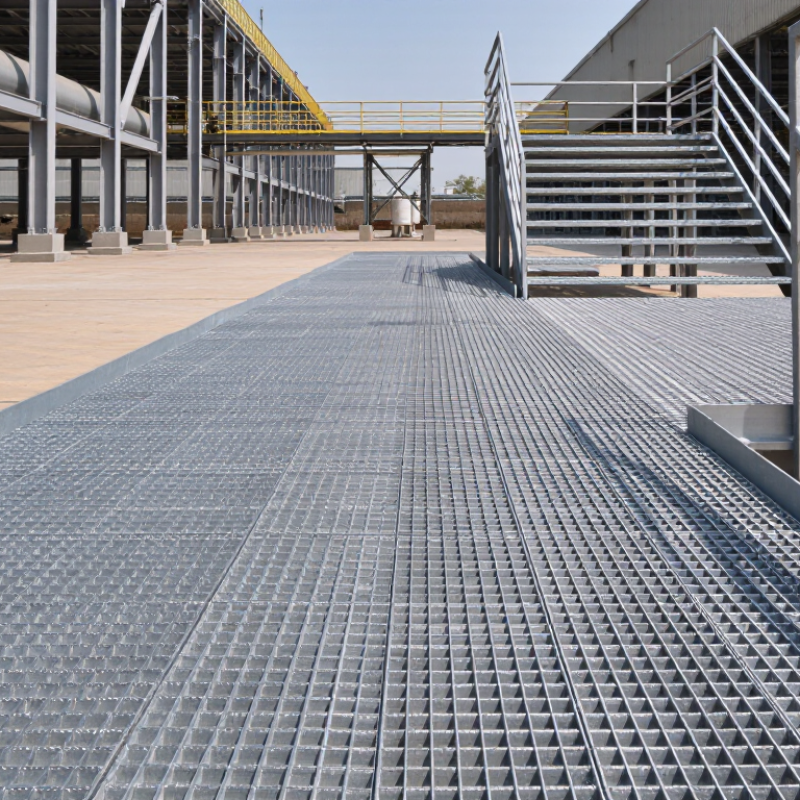
What Is Steel Grating and How Is It Used?
Steel grating is a floor panel made from parallel load-bearing bars and smaller cross bars. The bars are usually welded, pressed, or locked together. Its open surface allows water, mud, oil, and light debris to pass through. This improves drainage and reduces slippery patches. Less cleaning is needed. It also lets air and daylight reach lower areas.
Steel grating is used on factory walkways, platforms, stair treads, drainage channels, and equipment supports. Workers can see beneath their feet, which helps during inspections. In wet processing areas, the open design prevents water from collecting around machinery. Serrated surfaces can provide better traction, but they may feel uncomfortable under thin footwear. That detail is sometimes overlooked.
Choosing the right grating requires more than checking the lowest factory price. Engineers should review span length, expected loads, bearing-bar size, surface treatment, and fixing methods. Galvanized steel suits many outdoor locations, while stainless steel may perform better in corrosive environments. I have found that installation details often matter as much as material quality. Loose panels can rattle, shift, or create trip hazards. Ask for load tables, dimensional drawings, coating information, and inspection records before ordering. A sample panel is useful, though it cannot fully represent long-term site performance. Misjudging corrosion exposure remains a common mistake.
China Top Steel Grating for Sale at Factory Price? – What Is Steel Grating and How Is It Used?
Steel grating is an open grid made from load-bearing bars and cross bars. This chart shows the calculated open-area percentage for common 30 mm, 40 mm, and 50 mm bearing-bar spacing when using a 6 mm bearing bar width. The open design supports drainage, ventilation, light transmission, and access platforms while reducing weight compared with solid flooring.
Main Types and Structural Features of Steel Grating
Steel grating remains widely used for platforms, walkways, drainage covers, and industrial stairs. The World Steel Association reported 1,892.2 million tonnes of crude steel production in 2023. This scale supports stable material availability, but raw steel volume does not guarantee suitable grating quality.
The main types include welded, press-locked, riveted, and swage-locked grating. Welded grating uses bearing bars joined to cross bars at each intersection. It offers strong load transfer and reliable resistance to vibration.
Press-locked grating has cross bars forced into pre-cut slots. Its smooth surface suits architectural floors and lighter industrial areas. Riveted grating uses mechanically fastened connections, while swage-locked designs combine twisted cross bars with bearing bars. These structures can improve visual uniformity and lateral stability.
Structural performance depends on bearing-bar depth, thickness, spacing, span, and surface treatment. Serrated bars improve traction in wet areas. Plain bars allow easier cleaning. ISO 14122-2:2016 addresses access platforms and walkways, while NAAMM MBG 531 provides widely used steel-grating design guidance. A factory quotation should show these dimensions, not only price per square meter. A cheaper panel may use thinner bearing bars or wider spacing. That difference becomes serious under moving loads. Load tables also need careful checking. They are useful, but site conditions can differ. Corrosion, impact, and poor support alignment are often underestimated.
How China Steel Grating Factory Prices Are Determined
China Top Steel Grating for Sale at Factory Price?
How China Steel Grating Factory Prices Are Determined
China steel grating factory prices begin with steel coil and billet costs. Daily market movement can change a quotation within days. Manufacturers then calculate the required steel weight for each panel. Bearing bar thickness, cross bar spacing, and panel dimensions strongly affect material consumption. Heavier load requirements usually mean deeper bars and a higher unit price. A small drawing change can matter.
Surface treatment creates another price difference. Plain black steel grating is generally less expensive than hot-dip galvanized grating. Galvanizing requires zinc, preparation, heating, and quality inspection. Some projects also request paint systems or special cutting. These details should appear clearly in the quotation, not inside vague wording.
Order volume, packaging, tooling, and delivery terms also influence the factory price. Large quantities may reduce labor and setup costs per panel. Small custom orders often need more cutting and production adjustments. Inland transport and export loading can be listed separately. Buyers should check whether the price includes taxes, documents, and port charges. In practical purchasing, the lowest offer is not always the most economical. A thin bearing bar may pass a visual check but fail under repeated loads. I have seen specifications misunderstood because drawings used different unit systems. Confirming material grade, tolerances, welding quality, and inspection records prevents costly rework. Mistakes still happen, especially when urgency replaces careful measurement.
How to Choose and Purchase Steel Grating from China
Choosing steel grating from China starts with load requirements, not the lowest quotation.
Confirm platform span, pedestrian or vehicle loading, bearing-bar size, cross-bar spacing, and deflection limits.
The World Steel Association reported 1,888.2 million tonnes of crude steel production worldwide in 2023, with China producing about 1,019.1 million tonnes.
This capacity supports broad sourcing, but it does not guarantee consistent quality.
Ask each supplier for material certificates, welding procedures, dimensional drawings, and recent inspection records.
Compare steel grades with project specifications, such as ASTM A36 or EN 10025 grades.
For outdoor applications, request hot-dip galvanizing details under ISO 1461.
Steel sections above 6 millimetres generally require an average zinc coating thickness of about 85 micrometres under that standard. Measure samples independently when possible. Paperwork can be polished.
A reliable purchase order should state tolerances, panel dimensions, surface type, packaging, marking, and acceptance rules.
Check whether serrated bars are needed for wet or oily walkways.
Request load-test evidence for unusual spans, because catalogue tables may not match real supports.
Calculate total landed cost, including inland transport, export packing, ocean freight, duties, and inspection.
Factory price can become expensive after omissions appear.
One common mistake is approving drawings too quickly; a 5-millimetre spacing error can affect safety, installation, and replacement costs.
Use a pre-shipment inspection before releasing the balance.