
Best EV Charger Cars for Your Electric Vehicle Needs?

As the world moves toward cleaner energy, the demand for electric vehicles (EVs) is soaring. With this shift, choosing the right Ev Charger Car becomes essential for consumers. Industry expert John Doe, an advocate for sustainable transportation, emphasizes, "The right charging solution can enhance your EV experience significantly." His insight highlights the growing importance of finding not just a vehicle, but also an appropriate charger.

Electric vehicles offer numerous benefits, including lower emissions and cost savings. However, many consumers overlook the different charging options available. Understanding the nuances of EV charger cars can help maximize efficiency. Some may find public charging stations difficult to navigate, leading to frustration. Selecting a car that matches one's lifestyle and charging needs can make all the difference.

Additionally, options vary widely in compatibility and charging speeds. Not every EV charger car fits every situation. Consumers should reflect on their daily routines and charging behavior. The landscape of electric vehicles is continuously evolving. A thoughtful approach to choosing an EV charger car is vital for the best results.
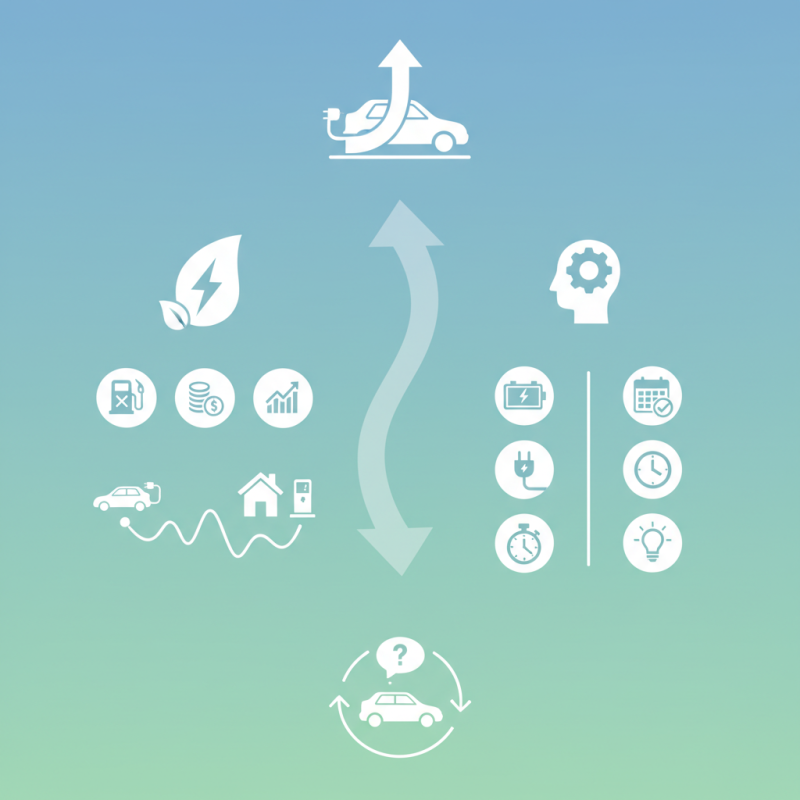
Best EV Charger Cars for Your Electric Vehicle Needs?

Understanding Electric Vehicle Charger Types and Their Compatibility

When considering electric vehicles, understanding charger types is crucial. There are different types of EV chargers, primarily categorized into Level 1, Level 2, and DC fast charging. Level 1 chargers use a standard wall outlet. They are convenient but slow, adding about 4-5 miles of range per hour. This might not be enough for daily drivers.

Level 2 chargers are more common and can be found in public charging stations. They provide a faster solution, delivering around 25 miles of range per hour. However, installation costs can vary greatly. You may need professional help, which complicates things. Then there are DC fast chargers, designed for quick stops. They can refill most EV batteries to about 80% in 30 minutes. But they are less widely available, often found along major highways.

Compatibility is another essential factor. Not all electric vehicles work with every charger type. Each model has different charging ports. This can create confusion, especially for new EV owners. It’s vital to check your vehicle’s specifications before investing in a charger. Taking the time to understand these factors can lead to smoother EV ownership.


Factors to Consider When Choosing an EV Charger for Your Car

When choosing an EV charger, several factors come into play. Charging speed is crucial. Level 1 chargers can take up to 24 hours for a full charge. In contrast, Level 2 chargers can deliver up to 25 miles of range per hour. This is ideal for daily use. According to industry reports, 80% of EV owners prefer Level 2 charging at home.

Cost is another important factor. Installation can vary significantly. The average cost to install a Level 2 charger is around $1,000. Yet, some home setups may exceed $2,500. It's essential to assess your budget. Additionally, compatibility with your car model matters. Most EVs are versatile, but checking specifications is wise.

Charging location also has implications. Urban areas may offer more public fast chargers, yet rural regions could lack facilities. A study indicates that 60% of EV owners charge at home primarily. It's crucial to consider your daily driving habits. Reflect on your charging needs. Do you travel long distances? Or are you mainly commuting locally? Tailoring your choice based on these factors can enhance your electric vehicle experience.

Top Electric Vehicles with Excellent Charging Solutions Available

Charging solutions are vital for electric vehicle (EV) users. Many electric vehicles now come equipped with advanced charging technologies. Some can recharge significantly faster than older models. This speed reduces downtime, a crucial factor for busy users.

Many models feature a diverse range of charging options. Users can plug into standard home outlets or dedicated wall chargers. Public charging stations provide added convenience when on long trips. Rapid charging stations can add significant range in just a few minutes. However, not all locations will have these options. Planning ahead ensures you'll find accessible charging points.

It's important to consider the charging platform each vehicle uses. Compatibility with various charging networks might reflect a model's overall usability. While most EVs can connect to various sources, some may face restrictions on charging options. With the growing charging infrastructure, there is still room for improvement in network availability and reliability. Car manufacturers must keep evolving their charging solutions to meet these ever-growing needs.

Comparing Charging Speeds: Level 1, Level 2, and DC Fast Chargers

When considering an electric vehicle (EV), understanding charging speeds is crucial. There are three main types of chargers: Level 1, Level 2, and DC Fast Chargers. Each offers different advantages and drawbacks.

Level 1 chargers operate on a standard household outlet. They provide about 4-5 miles of range per hour. This may work for short commutes, but it's slow for long drives. They have the advantage of being readily available, but you'd likely need a dedicated charger for more convenience.

Level 2 chargers are faster, offering 25 miles of range per hour. They require a 240-volt outlet and are often installed in homes or found at public charging stations. This level strikes a balance between speed and accessibility. While installation may cost more upfront, the time saved is often worth it.

DC Fast Chargers lead the pack, delivering 100 miles of range in just 30 minutes. However, the infrastructure is not as widespread. Using DC Fast Chargers can be less convenient, especially if they're busy or poorly located. They provide speed but can be intimidating, especially for new EV owners.

Tips: Assess your daily driving needs. If you drive only short distances, Level 1 may suffice. For longer trips, consider investing in a Level 2 charger. Always map out charging locations when planning road trips.

Charging Speeds of Electric Vehicle Chargers

The Future of EV Charging Infrastructure and Advancements in Technology

The future of EV charging infrastructure is bright yet complex. Rapid advancements in technology are reshaping how we power electric vehicles. New charging stations pop up in urban areas, but rural regions often lag. This uneven distribution raises concerns about accessibility. Fast chargers can recharge a vehicle in under 30 minutes. However, not everyone can access these stations when needed.

Wireless charging technology is emerging as a game-changer. Imagine parking your car and it begins to charge automatically. Yet, this technology is still in its infancy. Many people remain skeptical about its efficiency and reliability. Safety issues also linger. As we consider these innovations, we must ask: Are they practical or just a pipeline dream?

Battery technology continues to evolve. Solid-state batteries promise longer ranges and faster charging. But they remain expensive and difficult to mass-produce. Startups and established companies are racing to find solutions. Yet, the question remains: can they deliver on promises in a timely manner? As researchers work diligently, the gap between demand and supply may widen.

Start typing and press Enter to search