As the automotive industry faces increasing pressure to adopt sustainable practices, car recycling parts have gained significant attention. According to a report by the International Recycling Bureau, the global car recycling market is expected to reach $50 billion by 2026. This growth reflects a shift towards reusing and recycling materials rather than relying solely on new production. Experts like Dr. Emily Stokes, a leader in automotive sustainability, emphasize the importance of this transition: "Car recycling parts not only reduce waste but also conserve energy and resources."
However, challenges remain. The recycling process can be complex and requires advanced technologies. In some cases, the recovery rate of valuable materials is still insufficient. Despite improvements, many parts end up in landfills, missing an opportunity for reuse. A recent study from Auto Recyclers International found that approximately 30% of recyclable car parts are not recovered effectively.
The future of car recycling parts holds promise, but industry players must address these flaws. Collaboration and innovation will be vital. As we look toward 2026, the focus on efficient practices and better technologies will define the success of sustainable automotive practices. Without these efforts, the full environmental benefits of recycling may not be realized.

The automotive industry is witnessing a pivotal shift toward sustainable materials in car recycling practices. According to a recent report by the Ellen MacArthur Foundation, automakers can significantly increase the use of recycled materials, potentially reaching up to 40% in vehicle production by 2026. This shift is not just a trend; it is becoming a necessity as environmental regulations tighten around the globe.
Innovative materials are emerging, such as bio-based plastics and recycled metals. These materials reduce the carbon footprint while preserving performance. However, the recycling process itself still faces challenges. Not all materials are easily recyclable. For instance, composite materials often complicate recycling due to their multi-layered nature. A study from the International Journal of Automotive Technology highlighted that less than 30% of the plastics used in vehicles are currently recycled.
Consumer awareness is growing, yet there remains a gap in understanding the importance of sustainable materials. Education is crucial to drive demand for recycled components. The industry must invest in better recycling technologies and practices. As new regulations encourage eco-friendly initiatives, the concern is whether all stakeholders can adapt fast enough. Transitioning to sustainable practices is essential, but it requires collaboration and innovation from every segment of the automotive sector.
The automotive industry is undergoing a significant transformation in parts recycling. Innovative technologies are at the forefront of this change. Advanced robotics, for instance, now play a vital role in the disassembly of vehicles. These machines can identify materials quickly, optimizing the recycling process. A recent report indicates that automation can increase recycling efficiency by up to 30%. This efficiency is essential, given that about 25 million tons of automotive waste are generated annually.
Another promising trend is the use of artificial intelligence. AI algorithms analyze data from past recycling processes. They predict the best methods for material recovery. This predictive capability can improve recovery rates by 20% or more. However, reliance on technology raises questions about job displacement. Balancing innovation with workforce stability is critical.
Moreover, the market for recycled automotive parts is projected to reach $70 billion by 2026. This growth highlights the need for sustainable practices. Yet, challenges remain. Quality control is often inconsistent in recycled parts. Stakeholders must address these quality issues to build trust. Ultimately, while emerging technologies offer great hope, a critical reflection on their implementation is needed.
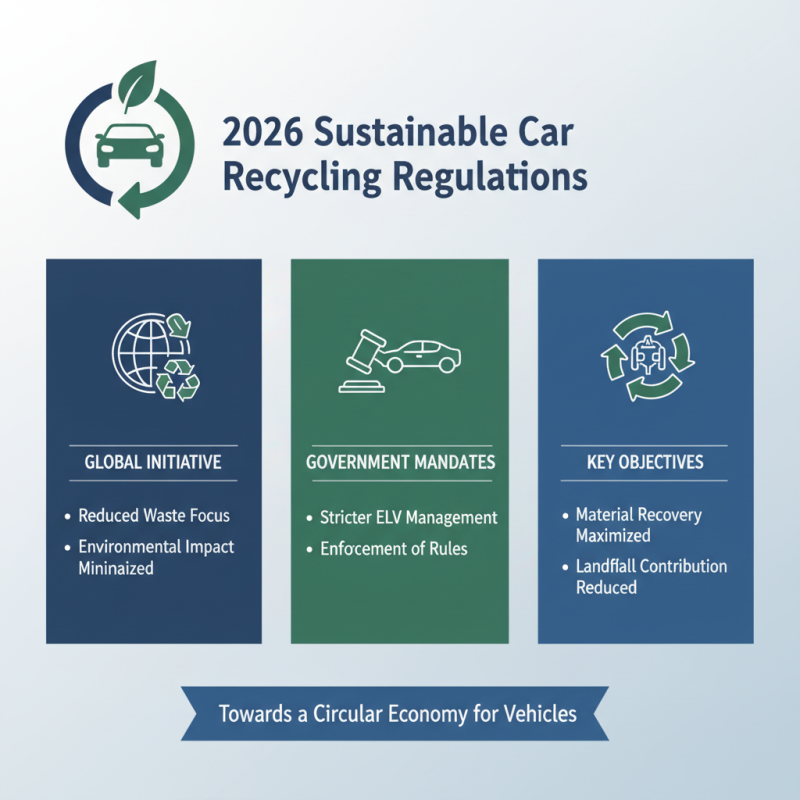
As we look toward 2026, several key regulations are shaping sustainable car recycling practices. The global push for reduced waste is a focal point. Governments are enforcing stricter rules on how end-of-life vehicles are managed. These regulations aim to minimize the environmental impact of discarded cars. Many focus on maximizing the recovery of materials and reducing landfill contributions.
Recycling facilities must comply with new standards. They are required to track the recycling process. This ensures that hazardous materials are disposed of correctly. Not all facilities meet these standards, raising concerns about compliance. Proper training for workers is essential for effective recycling.
**Tip:** Stay informed about local regulations. Ensure your recycling facility meets the necessary guidelines.
Communities can also play a role. Encouraging better consumer awareness about sustainable practices is vital. Not everyone understands the recycling process. Some might assume that any scrap yard is a good option. While this may not be true, educating the public can help steer them toward responsible choices.
**Tip:** Share knowledge about proper recycling methods. Organize local workshops to increase awareness.
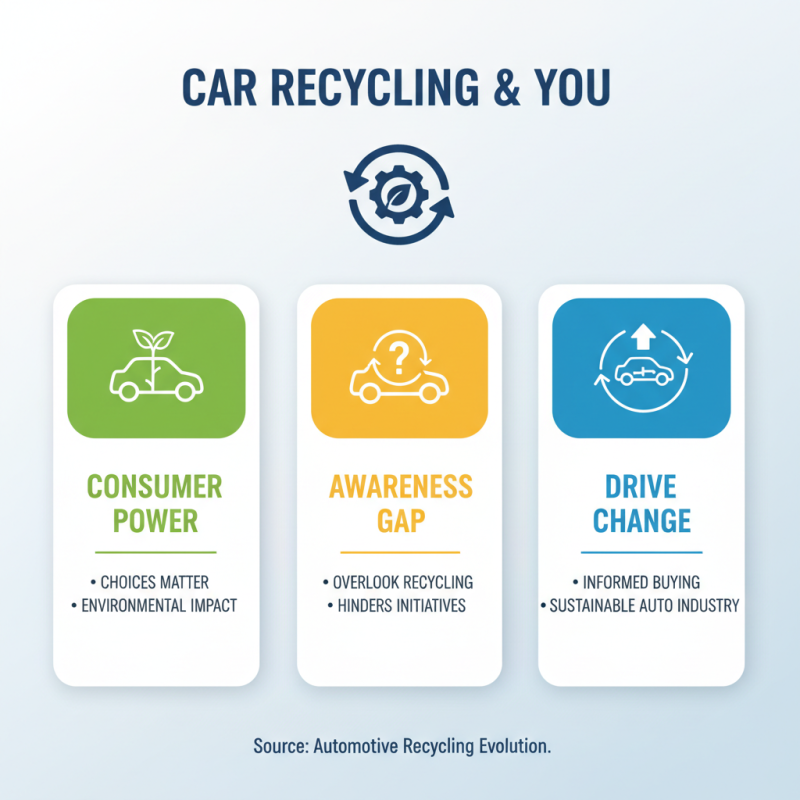
As car recycling continues to evolve, consumer awareness plays a vital role. Many people are unaware of how their choices impact the environment. When purchasing vehicles, consumers often overlook recycling potential. This lack of knowledge can hinder effective recycling initiatives. Increased understanding can drive demand for sustainable practices within the automotive industry.
Social media has amplified discussions about sustainability. Engaging content highlights the importance of recycling car parts. Awareness campaigns are essential for educating consumers. Many still believe that old cars must be sent to landfills. This misconception needs addressing. Simple changes in consumer behavior can lead to significant shifts in the market. Supporting car recycling initiatives requires effort from consumers. They must seek out businesses that prioritize sustainability.
Moreover, there is a gap between knowledge and action. Some consumers know about recycling options but fail to act. Barriers include convenience and accessibility. Not everyone has easy access to recycling facilities. Addressing these obstacles is crucial for progress. Better solutions are needed to bridge this gap. Ultimately, empowering consumers leads to a more sustainable automotive future.
The future of automotive recycling is tied to the principles of a circular economy. This approach emphasizes reusing materials rather than discarding them. In 2026, we will likely see greater innovation in recycling techniques. Methodologies will evolve to extract more value from used car parts. The challenge remains in ensuring the efficiency of these processes.
Building a truly sustainable automotive recycling system requires collaboration. Automakers, recyclers, and consumers must work together. Effective communication can lead to better recycling practices and raise awareness about the benefits. However, we often overlook the complexities involved. For instance, not all parts can be easily recycled, causing waste.
Another aspect to consider is the technology gap. Advanced methods are not uniformly accessible. This inconsistency can hinder progress toward circularity. Developing a network that shares knowledge could help to bridge this divide. Moreover, stakeholders need to reflect on their roles. Are we doing enough to support sustainable practices in automotive recycling? This is a crucial question for the industry as we move forward.
Logel’s Auto Parts
116 Bridge St East
Kitchener, Ontario
N2K 1J6
Phone: 519-745-4751
Toll Free: 1-800-818-9118
Hours 8:00-5:00 Monday to Friday
At Logel’s Auto Parts, we serve a range of communities in Southern Ontario, including:
Sign up today for the latest updates from the Logel’s Auto Parts team, including pricing for scrap vehicles, our newest product lines, current operating hours, and much more.